
Wire Rope & Steel Cable Lanyards
A wire rope lanyard is a fixed length lanyard cable assembly used to retain, tether, or actuate components. Typical configurations use galvanized or stainless steel cable with loops, stops, or stamped eyes at each end. These mechanical cable lanyard assemblies can function as pull lanyards, safety tethers that prevent loss, or simple retention cables that keep parts connected during service.
Tyler Madison designs and builds custom wire rope lanyard assemblies and cable lanyard assemblies for OEM equipment, fixtures, and tools. Every lanyard cable is engineered around your required length, load, and environment, then manufactured as a finished assembly with the right cable, coating, and end fittings.
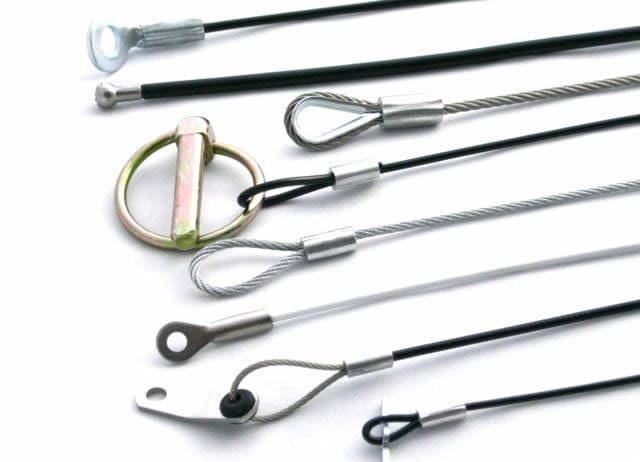
Designing Custom Lanyard Assemblies
Tyler Madison is a leading aircraft cable lanyard manufacturer and builder of custom wire rope lanyards. We specialize in small diameter lanyards, stainless steel lanyards, tool lanyards, lanyard cable assemblies and flexible cable assemblies ¼ inch diameter and under.
1. Define Function, Load & Environment
We start by selecting the correct wire rope for your load and motion requirements. Specifics details we’ll ask include:
- Whether the lanyard will act as a pull lanyard, safety tether, or retention cable
- Working load, any shock loads, and the safety factor you want to maintain
- Operating environment, including temperature, moisture, and exposure to chemicals or cleaning agents
- Any special requirements such as low stretch, low profile terminations, or quiet operation
This information lets us choose an appropriate wire rope construction and verify that the lanyard cable has enough capacity for the job.
Cable Material: For lanyards, we use galvanized wire rope for general-purpose industrial use, stainless steel for outdoor, marine, or corrosive environments.
We can always recommend a diameter and construction that balances strength, flexibility and durability. The details you share on the function and forces of your assembly will allow us to help offer nuance to the design process, fill in gaps of knowledge or help you establish one if you are starting a new design.
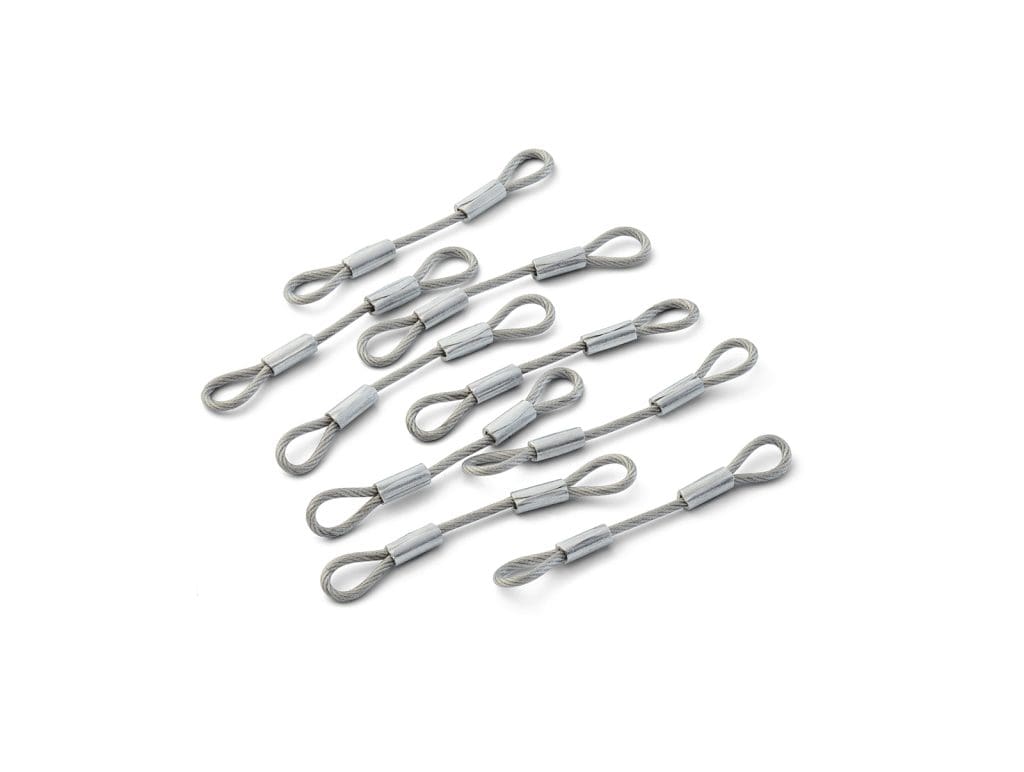
2. Set Length & Measurement Points
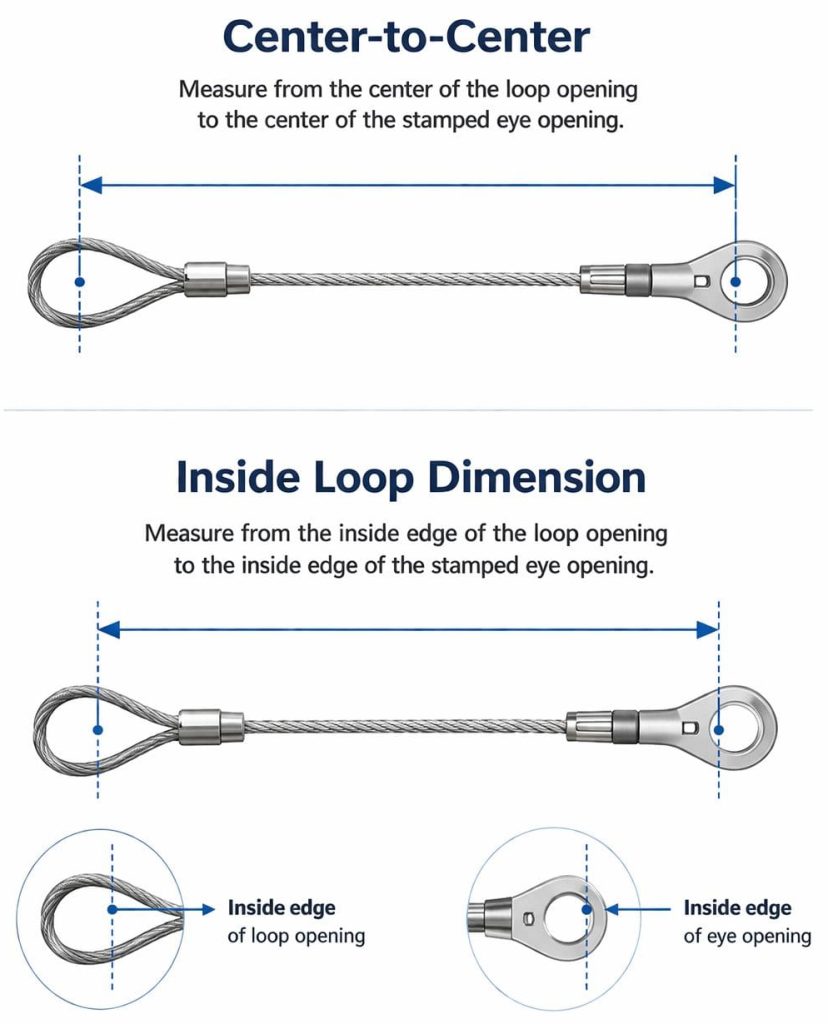
Length is usually the most critical dimension on a wire rope lanyard. We work with defined measurement points such as center-to-center of pinholes, inside loop dimension, or hardware-edge-to-hardware-edge. Together we establish practical tolerances so the lanyard fits and functions correctly, which includes:
- How we measure the assembly
- What tolerances we hold
- Where the lanyard attaches at each end (hole, stud, pin, bracket, or custom hardware)
- Exact measurement points you use, such as center-to-center, inside loop dimension, or hardware-to-hardware
- Clearance to nearby parts over the full range of motion
These factors are guided by our wire rope design guides—covering recommended tolerances, measuring points, breaking strengths, wire rope stretch and more.
Finalizing these details ensure a proper fit in your application.
3. Select Cable, Coating & End Fittings
Once function and length are defined, we specify the construction of the lanyard itself. We define practical tolerances based on cable diameter, construction, and coating so the lanyards fit consistently when you are ready to assemble them. We match cable diameter and construction to the load and bend radius, then select coating and end fittings.
Cable Diameter impacts working load, safety factor, and flexibility. Small cable diameters such as 1/32, 3/64, 1/16, and 3/32 inch are most common for compact, low-profile lanyards. See our diameter reference guide for more information.
Cable Construction (braid type) affects flexibility and resistance to abrasion. Typical wire rope lanyards use 7×19 (most flexible), 7×7 or 1×19 (least flexible). Visit our wire rope cable page to determine which is best for your application.
Cable Coating adds protection against wear and corrosion, and can reduce noise. We offer vinyl, nylon and color coatings. Visit our wire rope cable coatings page for more details on how to choose.
End Fittings or Terminals may include loop sleeves, stops, stamped eyes, threaded ends, thimbles, wire rope eyelets, ball shanks, handles/knobs, stops, strap forks, strap eyes, and threaded studs. See all available end fittings.
Custom hardware is also available that ties into your design. If your application includes hardware, let us know what type. We can add almost any type you need.
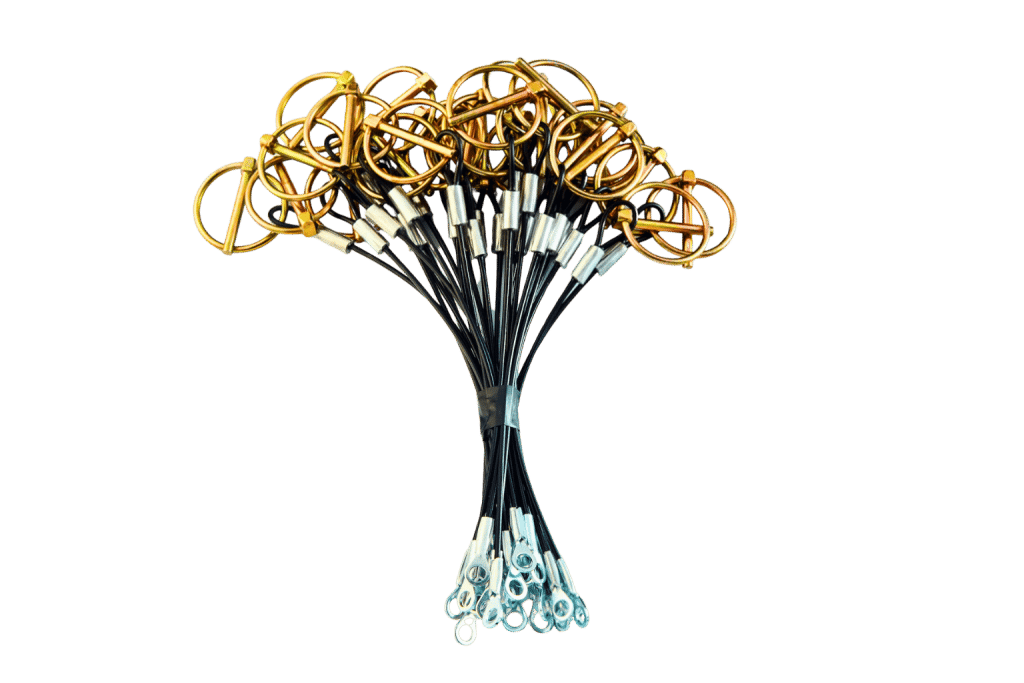
Customer Reviews
OEMs often come to Tyler Madison when existing lanyards fail early or stretch out of tolerance. After switching to our wire rope lanyard designs, many customers report cleaner installations and fewer service calls.

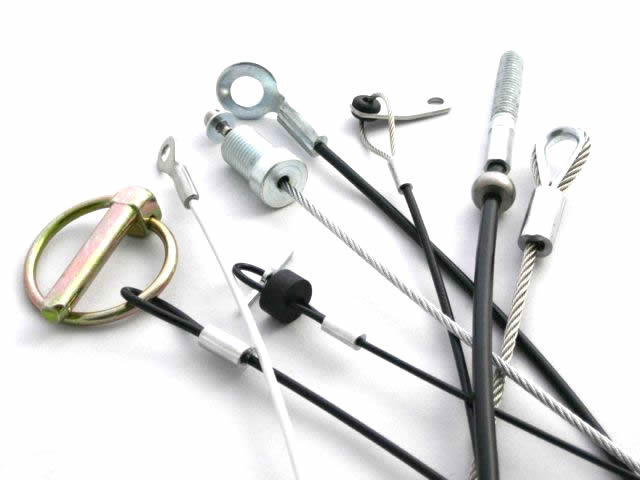
Lanyard End Fitting Configuration Options
The end fittings and layout determine how a wire rope lanyard attaches and how it behaves in service.
- Loop-to-loop lanyards for simple attachment around pins, bolts, or through plates
- Loop-to-stop and stop-to-stop lanyards where one or both ends seat in a counterbore, bracket, or custom hardware
- Thimble-reinforced loops when the lanyard sees higher load, repeated cycling, or contact with sharp edges
- Stamped eyes, threaded studs, and custom hardware for applications that need a defined hard connection at one end
We can match existing hardware, reverse engineer an old lanyard, or help you standardize several similar lanyards across a product line
Custom Wire Rope Lanyards
Lanyard Cable Assembly Manufacturer
Tyler Madison is a leading aircraft cable lanyard manufacturer and builder of custom wire rope lanyards. We specialize in small diameter lanyards, stainless steel lanyards, tool lanyards, lanyard cable assemblies and flexible cable assemblies ¼ inch diameter and under.
OEMs often come to Tyler Madison when existing lanyards fail early or stretch out of tolerance. After switching to our wire rope lanyard designs, many customers report cleaner installations and fewer service calls.
Let us know your needs for a custom wire rope lanyard assembly; we love to hear new ideas and make them work. Send us a drawing of the wire rope lanyard you are looking to create. Or call us 1-888-638-3604 to discuss your unique application.
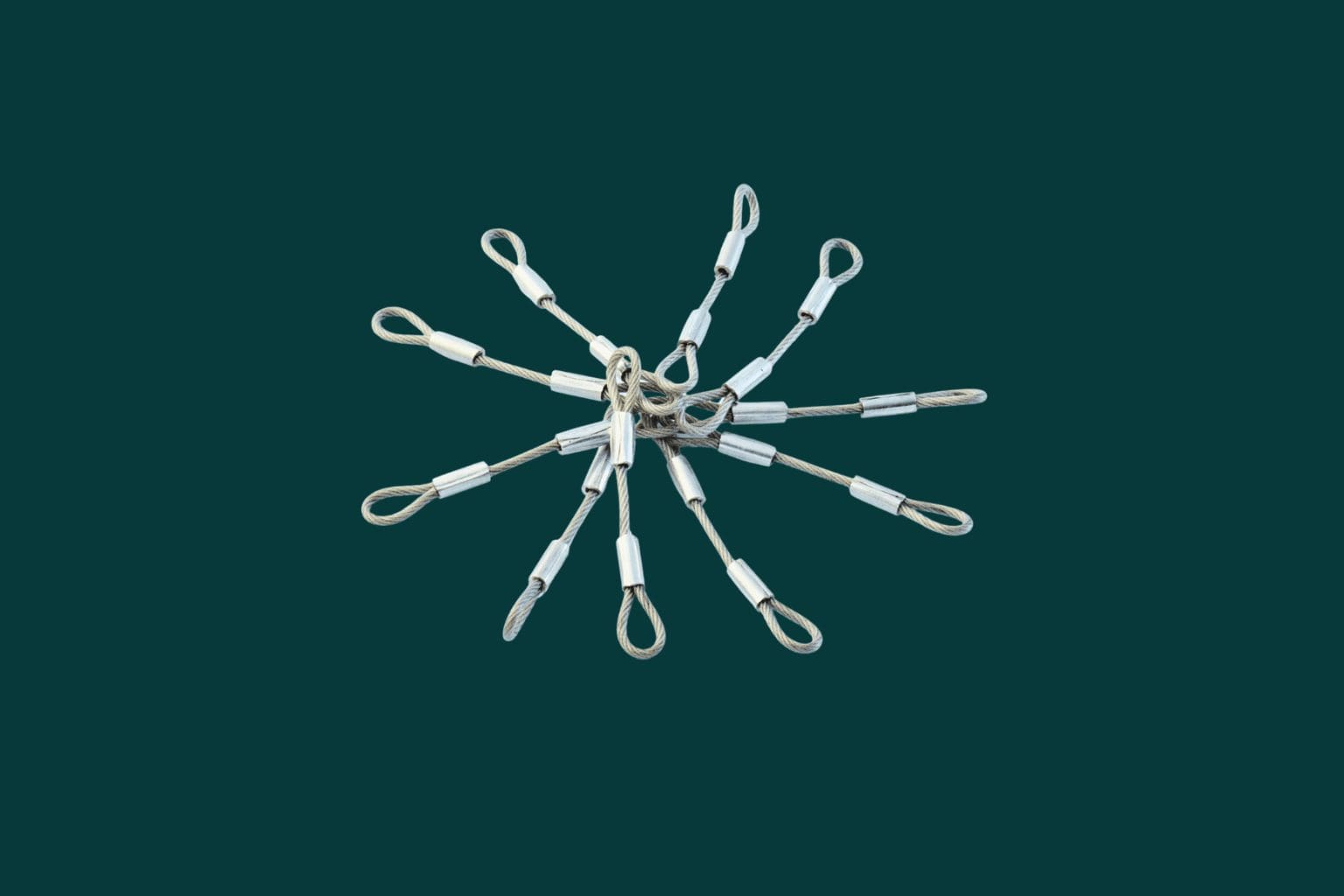
Coating Options for Wire Rope Lanyards
Coated cable lanyards protect both the cable and the components they attach to. Bare, vinyl, and nylon coated options available.
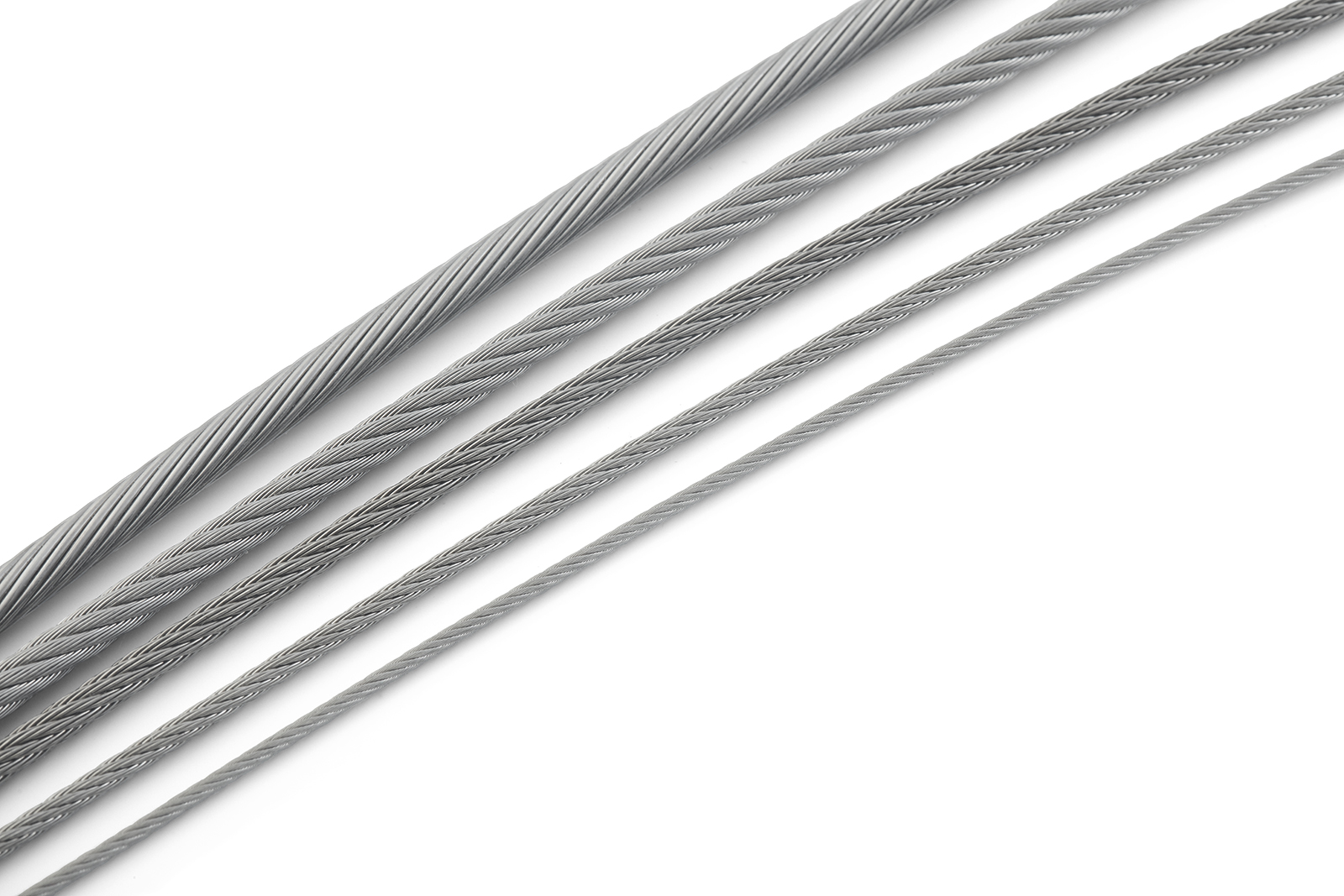
Bare Wire Rope Lanyards
Bare Wire Rope Lanyards for clean, dry environments or internal mechanisms

Vinyl coated lanyard cable
Vinyl coated lanyard cable for softer feel, better grip, and surface protection

Nylon cable lanyard assemblies
Nylon coated cable lanyards where abrasion resistance and durability are more important
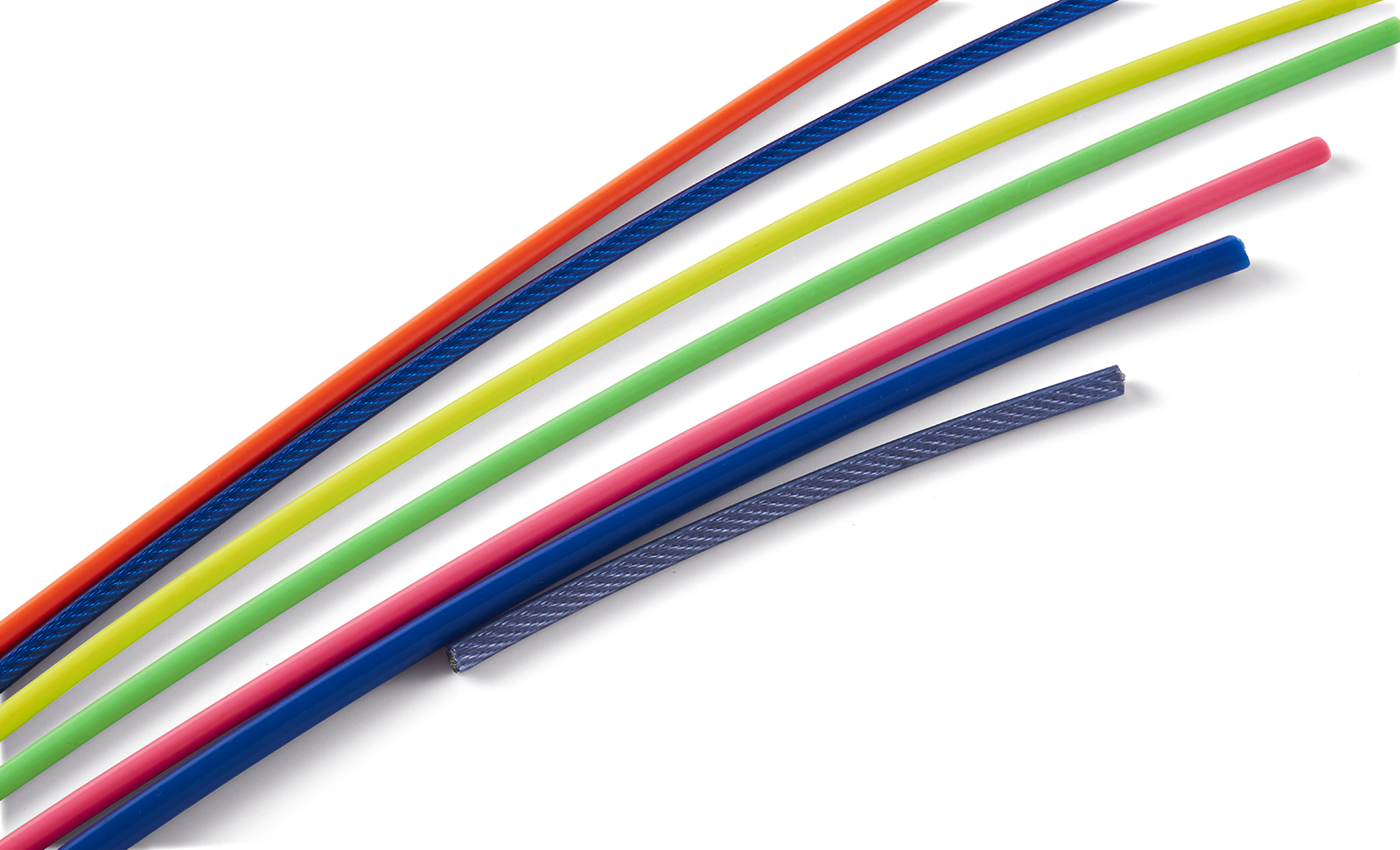
Color coded coatings
Color coded coatings so maintenance teams can quickly identify different lengths or functions in the field
Where Wire Rope Lanyards Are Used
Common Applications of Wire Rope Lanyards
Custom wire rope lanyards and cable lanyards appear anywhere a component must stay attached, controlled, or within reach. At their core, these cable lanyards connect two objects together. There are an infinite number of uses for stainless steel lanyards, but the most common are: security, holding, hanging, attaching, anchoring, lifting, supporting, and pulling.Our customers have used our custom wire rope lanyards and stainless steel lanyards in many different ways, including:
- Cable lanyards in fitness equipment and industrial machinery
- Pull lanyards for small actuators or releases
- Safety pins and latch retention
- Instrument and tool tethers
- HVAC Heating and cooling duct work (support lanyards for ducts and pipes)
- Seats (seat restraint lanyard)
- Access panel retention and doors
- Material Handling (hanging support lanyards, pulley cables)
- Specialized vehicles (security stainless steel lanyards for release pins, lid restraints)
- Lawn and garden equipment (security lanyards for release pins, lid restraints)
- Tailgates and Doors (latch lanyard, support lanyard, door restraint)
- Display cases (lid restraint, shelf support)
Wire Rope Lanyard FAQs
What is a wire rope lanyard and what is it used for?
A wire rope lanyard is a short length of wire rope or aircraft cable with end fittings or loops on each end. It is used as a tether, restraint, or connector to keep components attached, control movement, or provide support in industrial, commercial, and safety applications.
What is a wire rope lanyard assembly?
A wire rope lanyard assembly is a fixed length cable assembly made from stranded steel wire rope, terminated with end fittings at one or both ends. Unlike fabric or webbing lanyards used in fall protection, wire rope lanyards are engineered for mechanical applications where steel cable strength, abrasion resistance, and long service life are required. Common functions include pull actuation, equipment retention, and safety tethering. Tyler Madison manufactures custom wire rope lanyard assemblies using galvanized or stainless steel cable with application-matched end fittings such as loops, stamped eyes, stops, and thimbles.
What is important to consider when designing wire rope lanyards?
To design a custom lanyard, you need to consider the overall length, cable diameter and construction, material and coating preferences, the type of end fittings for each end and required strength. If your application includes hardware, let us know what type. We can add almost any type you need.
What cable sizes, materials, and coatings are available for wire rope lanyards?
Typically, these assemblies are made of 7×19 (most flexible), 7×7 or 1×19 (least flexible) cables. Materials include galvanized or stainless steel cable. Coatings include: No coating, Nylon, Vinyl (PVC), or Pebax; black, white, and clear coatings are the most popular, but just about any color can be chosen.
How do I specify a custom wire rope lanyard?
A brief description of how it will be used and what environment it will see. Drawings and photos are always helpful.
What cable sizes are recommended for wire rope lanyards?
Typically, these assemblies are made of 7×19 (most flexible), 7×7, or 1×19 (least flexible) cables
Which coating is best for outdoor cable lanyards?
Vinyl has UV inhibitors in it that protects the coating from the sun, uncoated stainless also works well in many environments.