
Understanding Control Cable & Push-Pull Controls

Push-pull controls are essential components in countless mechanical systems—found in everything from lawn mowers and exercise equipment to aerospace and medical devices. Despite their wide usage, they often go unnoticed, quietly performing the critical job of transferring force to control mechanisms remotely and reliably.
This guide breaks down what push-pull cables are, how they work, the different types available, and how to choose the right one for your application.
What is a Control Cable?
A control cable is a mechanical cable used to transmit motion and physical force to operate, activate, or regulate a component within a system. Control cables include both push-pull and pull-pull cables. Push-pull cables are designed to transmit both pushing and pulling forces, while pull cables are designed to primarily transmit pulling forces.
What is a Push-Pull Cable?
A push-pull cable is a flexible mechanical assembly designed to transmit force in both directions—pushing and pulling—through a protective casing. This dual-direction control makes them perfect for activating, regulating, or adjusting mechanical systems from a distance.
These cables are particularly useful in systems where direct contact with the control mechanism isn’t feasible due to space constraints, heat, vibration, or safety concerns.
Functionality:
Push-pull cables are designed to transmit force in both directions—pushing (compression) and pulling (tension). This makes them ideal for applications where two-way control is required.
Applications:
Used in systems that require both extension and retraction of a mechanism. Common examples include:
- Motorcycle throttles (dual-cable setups)
- Construction equipment controls
- Industrial machinery actuators
Design:
These cables often feature a solid wire core or an armored core to handle compressive forces. For lighter loads, stranded cables may be used. Proper design is crucial to prevent issues like buckling or excessive stretch during compression.
Example:
In a motorcycle throttle system, one cable pulls the throttle open, while another cable (or a spring) assists in returning it to idle—ensuring precise control in both directions.
What are pull cables?
Pull-pull cables transmit force by pulling on the cable in both directions, rather than pushing.
Functionality:
Pull cables are designed to transmit force in one direction only—through tension. They cannot push or handle compression.
Applications:
Ideal for mechanisms that only require pulling action, such as:
- Bicycle brake systems
- Throttle controls in small engines
- Industrial machinery where return motion is spring-loaded or gravity-assisted
Design:
Pull cables are typically built as Bowden cables—a flexible inner wire housed in a protective casing. They transmit motion through tension and are widely used due to their simplicity and reliability.
Key Distinctions
The fundamental difference is in force direction:
- Push-pull cables handle both compression and tension—ideal for two-way control.
- Pull cables handle only tension—suited for one-way actuation with a return mechanism.
Push-pull cables are more versatile and capable in systems requiring active control in both directions, while pull cables are simpler and more efficient when only one-directional force is needed.

How Push Pull Controls Work
Push-pull control cables consist of:

- Inner Cable (Core): Typically a solid wire or wire rope that moves linearly.
- Outer Conduit: A rigid or semi-rigid casing that guides and protects the inner cable while resisting compression.
- Core End Fittings: Mechanical terminations that connect the cable to the input (control) and output (actuated) mechanisms.
- Conduit Fittings: Mechanical terminations that allow the conduit to be routed and connected to fixed points inside your equipment. This is where forces are stabilized.
When force is applied at one end—either pushing or pulling—the inner core slides through the conduit, transmitting that force to the other end with minimal friction or loss of motion.
Types of Control Cable Assemblies
There are two types of Control Cable Assemblies:
Push-Pull Assemblies are used when the transmission of force is required in both directions of the assembly travel. A choke on a lawn mower engine is a good example of this.
Pull Assemblies are used when the transmission of force is needed in only one direction. Think of the hood release on your car.
Push-Pull Cable Assemblies
Custom push-pull assemblies offer multidirectional control for precise and accurate control of mechanical motion. The basic design and function of push pull assemblies makes them flexible and adaptable to fit into a wide variety of applications. The solid wire fittings of push pull assemblies make it easy to attach them to an assortment of connecting points on equipment, complicated control systems, or automated machinery.
The variety of hardwired end points of push pull assemblies ensures a secure and reliable connection to any type of device. The versatility of push pull assemblies offers a dependable way of motion transmission between fixed points or ones that constantly change their relative position.
Push and Pull Cables
Push-pull control cables are flexible mechanical cables used to transmit motion and force in applications where precise control is required. These cables are designed to push and pull, enabling remote or difficult-to-access operation of mechanisms. They’re essential in applications where remote and precise control of a mechanism is required. Their ability to transfer motion and force efficiently makes them suitable for a wide range of industries and uses.
Pull Assemblies
Pull Assemblies are used when the transmission of force is needed in only one direction. Think of the hood release on your car.
The unique nature of pull assemblies requires attention to the specific requirements of the application. The single direction of a pull assembly may give the impression that it is a type of device that has a simple and straight forward operation. There are other considerations that must be examined when creating a pull assembly.
Pull Cables
The most important factor related to pull assemblies is the load being applied to the cable. The stroke length and stretch of the cable determine the potential pulling ability of a pull assembly. If there is too much stretch, the cable won’t be able to activate the device. In the design phase of a pull assembly, Tyler Madison’s expert engineers closely examine the pull assembly’s function to ensure proper performance.
What is the Difference Between a Push-Pull Cable and Bowden Cable?
A Bowden cable is a pull-only cable. It cannot transmit compressive force, so it’s used when the action only requires a pulling motion. In contrast, push-pull cables can transmit both push and pull forces, making them suitable for more complex motion control systems that require both extension and retraction.
What are Push-Pull Cables Used For?
Push-pull cables are used to remotely control functions that require both extension and retraction. Examples include adjusting levers, engaging machinery, opening and closing dampers or hatches, and controlling throttle, brake, or clutch systems.
Common Applications of Push-Pull Cables
Push-pull cables are essential in systems that require reliable, remote, and responsive mechanical control. Their ability to transmit both pushing and pulling force makes them extremely versatile across a wide range of industries and equipment. Below are key functions explained in more detail:
Accelerating
Push-pull cables are frequently used in throttle control systems to increase engine speed or power output. In applications like lawn mowers, boats, construction equipment, or generators, the cable allows the operator to remotely accelerate the engine with precise feedback and control.
Actuating
Many mechanical systems require parts or subsystems to be activated or triggered—this is where push-pull cables act as remote actuators. For example, opening a valve, engaging a clutch, or triggering a switch can all be done using a push-pull cable assembly.
Braking
In some applications, particularly in industrial equipment or off-road vehicles, push-pull cables are used for brake engagement. The cable transfers mechanical force to the braking mechanism, offering reliable response without the need for hydraulics or electronics.
Choking
Used in carbureted engines (like small lawn engines), the choke control adjusts the air-fuel mixture for cold starts. A push-pull cable allows operators to open or close the choke from a control panel, rather than accessing the engine directly.
Regulating
These cables are commonly used to regulate flow, temperature, or motion in machinery. For example, a push-pull cable might control the position of a damper, heat flap, or fuel control mechanism, allowing for fine-tuned adjustments while the machine is in operation.
Steering
In marine applications and small utility vehicles, push-pull cables are often used in mechanical steering systems. They transmit turning input from the helm or steering wheel to the rudder or wheel assembly, offering durable and low-maintenance directional control.
Cycling
Push-pull cables play a role in automatic or repetitive motion systems that require timed or sequenced activation. This might include cycling machinery components in manufacturing, such as opening/closing hatches, feeding materials, or indexing parts.
Controlling
At the broadest level, push-pull cables serve as mechanical control links—used to operate or adjust systems from a distance. This includes controlling everything from seating mechanisms and engine components to safety interlocks and robotic arms.
What Industries Use Push-Pull Control Cables?
Push-pull control cables are relied upon across a wide range of industries for their ability to deliver smooth, remote, and mechanical actuation in challenging environments. Below are key industries and how they use these versatile assemblies:
Automotive
Push-pull cables are used extensively in vehicles to operate and adjust mechanical systems from within the cabin or under the hood. Applications include:
- Throttle controls
- Hood release mechanisms
- Trunk and fuel door releases
- Gear shift selectors
- HVAC blend door actuators
Aerospace
The aerospace industry uses push-pull cables where space is limited and safety-critical mechanical control is required. Applications include:
- Flight deck lever controls
- Hatch and panel actuation
- Landing gear and door systems
- Seat and tray table adjustments
Marine
In boats and watercraft, push-pull cables are preferred for their corrosion resistance and ability to perform in wet, high-vibration conditions. Applications include:
- Throttle and shift controls
- Steering systems
- Trim and tilt actuators
- Hatch lifts and deck equipment
Medical Equipment
Precision, reliability, and smooth operation make push-pull cables ideal for medical and healthcare devices such as:
- Hospital beds (raising/lowering)
- Wheelchair controls
- Adjustable examination tables
- Surgical and diagnostic equipment
- Rehab and mobility devices
Heavy Equipment
Construction and agricultural machinery rely on rugged, high-load cables to control large, powerful mechanisms remotely such as:
- Excavator bucket controls
- Hydraulic valve actuation
- Cab seat and control adjustments
- Lift and tilt mechanisms
Fitness Equipment
Durable push-pull assemblies support safe, smooth mechanical operation in workout and resistance machines.
- Cable-based resistance systems
- Adjustable seats or arms
- Weight selector pins
- Rowing and leg press machines
Office Equipment
Push-pull cables provide ergonomic adjustment options for modern workspaces for things like:
- Adjustable chair controls
- Sit-stand desk mechanisms
- Filing cabinet or storage release systems
- Drawer or arm adjustments in modular furniture
Manufacturing & Industrial Automation
In factories and production lines, push-pull assemblies offer a simple, robust way to control moving parts.
- Conveyor gates and diverters
- Packaging equipment
- Robotic or CNC machine tool changers
- Access panel controls
Recreation and Powersports
From go-karts to snowmobiles, recreational vehicles require reliable, compact control solutions.
- Throttle and brake controls
- Seat adjustment or latch releases
- Hood/tank release mechanisms
- Accessory actuation (lights, winches, etc.)
Automation & Robotics
Push-pull cables allow for manual override or mechanical redundancy in automated systems. These include:
- Manual safety interlocks
- Emergency shutdown levers
- Motion control where electronic solutions are not feasible or cost-effective
Engineering & Design Considerations
Key Components of a Push-Pull Assembly
Understanding how a push-pull cable functions starts with knowing its core components. Each part plays a vital role in how the system handles force, direction, and movement.
Inner wire rope or rod: The core element that transmits mechanical force through tension or compression.
Conduit with inner liner and armor: Provides structure and protection to the inner wire, while also minimizing friction.
End fittings and terminals: These connect the cable to the control or load mechanisms securely.
Mounting brackets and guides: Keep the assembly in place and guide movement to prevent misalignment.
Core Wire Options for Control Assemblies
Choosing the right core wire is essential for ensuring performance under load. These variables depend on the force being applied, the environment, and the application.
Materials: Typically galvanized or stainless steel, depending on corrosion resistance and strength needs.
Construction:
7×19 – Most flexible
7×7 – Balanced flexibility and strength
1×19 – Least flexible, but best for compressive loads
Load Considerations: Most force is applied during the pull phase, so the cable must be selected based on load direction and required durability.
Conduit Options
The conduit surrounds and protects the inner cable. Depending on the use case, different layers and coatings are applied for added strength or environmental resistance.
Cover: Options include vinyl, HDPE, or bare wound wire depending on durability and flexibility needs.
Liner: Usually HDPE-lined for low friction, though some applications may not require one.
Braid: Reinforced with wound music wire or encased in a polymer-coated braid for added strength and resistance to compression.
Choosing Conduit Cable
When it comes to control cable assemblies, the quality of the conduit used can make or break the functionality and durability of the finished product. At Tyler Madison, we take pride in offering premium Bowden conduit that outperforms standard alternatives on the market.
Types of Conduit
Conduits come in various styles, each tailored to specific uses.
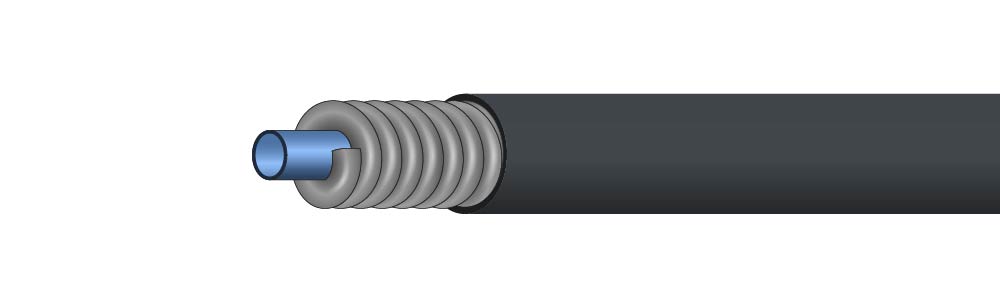
Bowden-Style Conduit
Known for its exceptional flexibility and durability, Bowden-style conduit is specifically designed for control cables, ensuring precision and consistent performance.

Braided Conduit
Features an internal braided layer for added strength and resistance to crushing, ideal for heavy-duty applications.
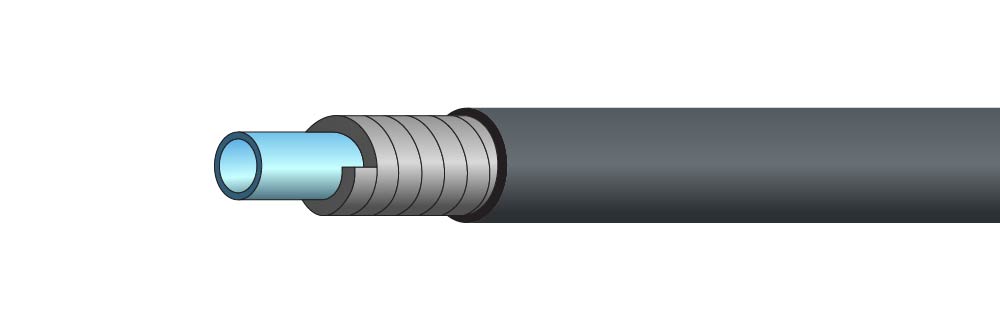
Flat-Wound Conduit
Offers a flat, coiled structure that provides excellent flexibility and compressive strength, commonly used in applications requiring tight bends.
End Fittings & Terminals
End fittings are where the cable meets the rest of your system—so precision and compatibility are key. They come in a wide variety of styles to suit different attachment methods.
- Common options: Ball ends, stamped eyes, stops, threaded studs, strap forks, thimbles, handles and knobs.
- Customization: Many manufacturers, including Tyler Madison, offer custom end fittings tailored to unique applications or constraints.
Key Considerations for Push-Pull Cable Design & Application
- Load Requirements: How much force will be transmitted?
- Cable Travel Distance: How far does the mechanism need to move?
- Routing and Environment: Will the cable be exposed to heat, moisture, chemicals, or abrasion?
- Durability & Maintenance: Choose materials that match the operating environment.
What is the Life Expectancy of a Control Cable?
Life expectancy depends on:
- Material quality
- Frequency and intensity of use
- Environmental exposure
- Proper installation and maintenance
High-quality cable assemblies can last several years in demanding environments with routine maintenance.
Choosing the Right Control Cable Assembly
Selecting the proper cable requires understanding:
- Force direction (push-pull vs. pull-only)
- Required stroke length and load capacity
- Routing constraints (tight bends, moving machinery)
- Environmental exposure (moisture, heat, abrasion)
- Mounting and termination needs
Tyler Madison offers offers world class conduit cable designed for durability, flexibility, and long-term performance. Our team helps engineers design the right assembly by evaluating all these variables. Functional prototypes are often created to ensure fit and performance before full production.
Benefits of Push-Pull Cables
Push-pull cables are a go-to solution for many engineers and manufacturers because of their reliability, versatility, and simplicity. Here’s what makes them such a popular choice:
Remote control of mechanical systems:
These cables allow operators to control systems from a distance—perfect for hard-to-reach or hazardous environments where direct access isn’t possible.
No need for electrical or hydraulic systems:
Push-pull cables provide mechanical actuation without relying on power, fluids, or electronics—making them ideal for simple, low-maintenance setups.
Excellent durability in demanding environments:
Designed to handle vibration, heat, corrosion, and abrasion, these cables are built to last in harsh industrial, automotive, and marine conditions.
High level of customization:
From cable length and material to fittings and conduit type, push-pull systems can be tailored to match exact performance and installation needs.
Flexible routing and easy integration:
Their flexible yet rugged construction makes it easy to route these cables through tight spaces, around corners, and across moving components.
Smooth, efficient force transmission:
Push-pull cables are engineered for low-friction motion, allowing precise and consistent transfer of mechanical force with minimal energy loss.
Custom Control Cable & Assemblies
Push-pull control cables are an essential solution for transmitting mechanical force in modern machinery. Their strength, flexibility, and bi-directional control capabilities make them ideal across a wide range of industries and environments.
Whether you need a custom-engineered assembly or a ready-made solution, Tyler Madison provides premium control cable systems designed for performance and reliability.
Want help designing your next control cable?
Contact our team or explore our Push-Pull Cable Design page for more information.